Piano & Repertoire
Cocktail Hour Piano Music: What to Play After the Ceremony
Published · Updated
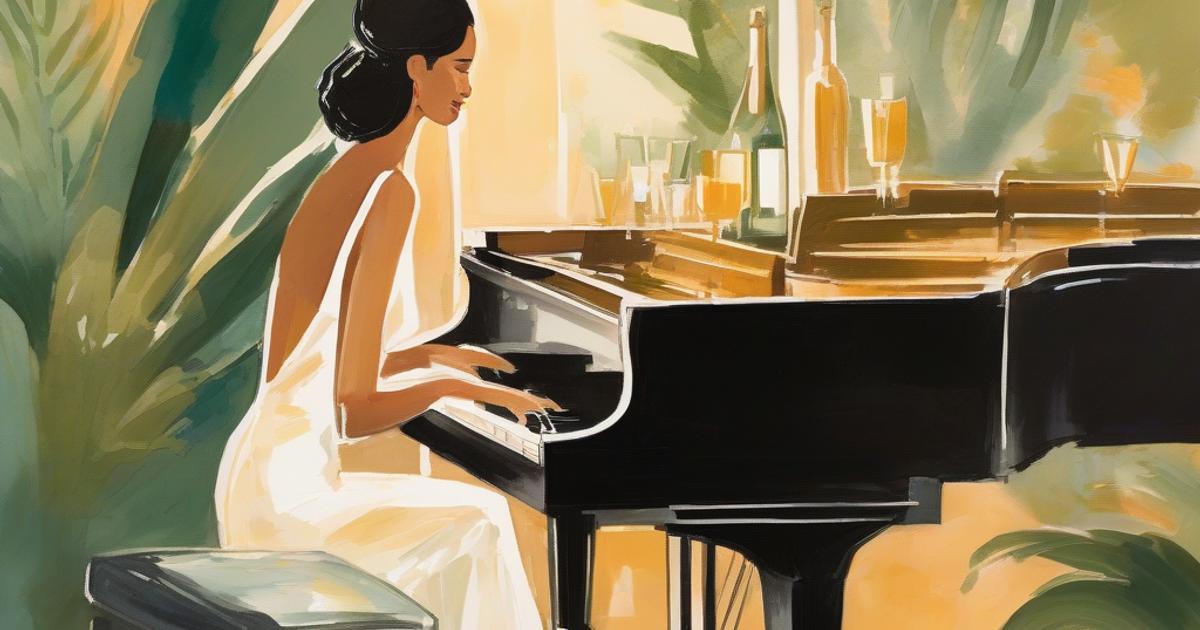
The ceremony ends and suddenly you need music for guests holding champagne and catching up before dinner — a question many couples haven’t thought through when they book. Cocktail hour calls for a different feel than the aisle: here’s what actually changes, so you can plan it alongside your ceremony rather than as an afterthought.
How Cocktail Hour Music Differs From Ceremony Music
Ceremony music is built around distinct, timed moments — the processional, the vow exchange, the recessional — where a piece starts and ends with something specific happening. Cocktail hour works differently: it’s a continuous backdrop for guests mingling, holding drinks, and moving between spaces, so the music runs as one longer, uninterrupted set rather than a sequence of cued pieces. The musicians are typically the same ones booked for your ceremony, but the role the music plays — and the pacing — shifts from marking moments to setting a mood.
Cocktail Hour Musicians: Same Formation, or a Different Sound?
In most cases, the same musicians who play your ceremony continue straight into a cocktail hour set without changing instrumentation. Our wedding pianist guide confirms this for Solo piano, and it holds for our other formations too: Duo, Trio, and String Quartet are all built to cover ceremony through cocktail hour as standard. See our packages page for which formations list cocktail hour among their typical uses. If you’d rather change the sound, the formation can also differ between the two sessions — a String Quartet for the ceremony, for example, then Solo piano as guests move to drinks. Either way, what changes most isn’t the ensemble but the repertoire and pacing, covered next.
Repertoire That Works for a Relaxed, Conversational Setting
Cocktail hour repertoire favors pieces that support conversation rather than draw attention to themselves — lighter and more conversational than the processional or recessional pieces chosen for the ceremony itself. Our repertoire spans a few different moods for this stretch of the day: classical pieces like Saint-Saëns’ Le Cygne (The Swan) and Elgar’s Salut d’Amour sit alongside film themes such as Michael Giacchino’s Married Life from Up and Joe Hisaishi’s Summer, and jazz-era standards like Fly Me to the Moon and La Vie en Rose. None of it is written to compete for attention — the goal is a comfortable backdrop, not a performance guests are asked to watch. Piano tends to carry this stretch of the day especially well: it holds the harmony and rhythm on its own the way it does across our formations, so a cocktail hour set can lean on solo piano or piano alongside strings without ever sounding thin. Our repertoire page shows the fuller list by moment, including what’s tagged for cocktail hour specifically.
Pianist or DJ for Your Wedding Cocktail Hour?
It depends on what your guests are doing. If they’re mingling and talking over drinks, a live pianist — on their own or with strings — keeps the music under the conversation and shapes it to the room; if you want dancing to start straight away, a DJ is built for that. Many couples use both, one after the other, rather than choosing between them.
| Live pianist (or piano and strings) | DJ | |
|---|---|---|
| Sound | Played live in the space, paced to the room as guests mingle | Pre-mixed recordings |
| Repertoire | Classical, film, and jazz pieces, plus the songs you request | Original recordings of almost any song |
| Volume | Sits under conversation | Ranges from background to dance-floor level |
| Best fit | Drinks, mingling, and golden-hour photos | Dancing later in the evening |
The two rarely compete for the same stretch of the evening. A common pattern is live piano, or piano and strings, through the ceremony and cocktail hour, then a DJ or band once the reception moves into dancing — our wedding band vs. DJ vs. chamber ensemble guide covers how that handoff typically works. One practical note: we don’t bring our own PA system, so if your cocktail area is large or outdoors and needs amplification, it comes from the venue’s or your planner’s sound provider, which is worth coordinating alongside the DJ’s setup if you’re booking both.
Can You Book Ceremony and Cocktail Hour Together?
Yes — pairing ceremony and cocktail hour into one continuous booking is one of the most common requests we get, since your musicians are already set up and simply continue playing rather than packing up and returning later. It’s treated as one booking with an extended scope, not two separate bookings, which is usually simpler for your venue and timeline as well.
What to Tell Us About Your Cocktail Hour Setup
A few details help us plan cocktail hour music alongside your ceremony: whether it’s in the same location as your ceremony or a separate space, roughly how long you want it covered, and any songs or moods you’d like included beyond what we’d typically choose. If cocktail hour moves to a different area of the venue — a garden or terrace away from the ceremony space — let us know so we can plan setup and access for that second location. Share these details when you reach out or send them with your booking inquiry, and we’ll confirm scope and set structure together.
Cocktail hour isn’t the only stretch of the reception that needs its own musical plan — before guests even reach the bar, many couples make a grand entrance of their own, and our guide to reception entrance songs covers song ideas and timing for that moment. Once guests sit down, our guide to live music for your wedding reception dinner covers how volume and repertoire shift again for dinner.
Frequently Asked
Is cocktail hour music included with ceremony booking, or is it separate?
Cocktail hour is booked as its own set alongside your ceremony rather than an automatic inclusion. Most couples book the same musicians to continue straight through, and we confirm the exact scope — ceremony only, or ceremony plus cocktail hour — when you inquire.
Does the music get louder or more upbeat for cocktail hour?
The formation stays the same; what shifts is the repertoire. Cocktail hour draws on lighter, more conversational pieces — film themes and jazz standards alongside classical works — rather than the pieces chosen for the processional and recessional.
Can we request different songs for cocktail hour than the ceremony?
Yes. Many couples choose a separate, more relaxed set for cocktail hour, distinct from their processional and recessional pieces — let us know both lists when you inquire.
How long does a typical cocktail hour set run?
Cocktail hour is usually booked in a longer, continuous block than the ceremony's shorter cued pieces — our String Quartet formation, for example, is typically booked across two 45-minute sets covering ceremony through cocktail hour or reception. Tell us how long you need covered and we'll confirm the right set structure.
How many songs do you need for a wedding cocktail hour?
Most instrumental pieces run around three to four minutes, so an hour of cocktail music covers roughly 15 to 20 pieces. You don't need to choose them all — tell us the songs or moods that matter to you, and we fill the rest of the set from our repertoire.
Have a date in mind?
Message us on WhatsApp with your date and venue — we'll help you choose a formation.
Check Your Date Packages