Piano & Repertoire
Instrumental Wedding Songs: Your Favourite Songs Without the Vocals
Published
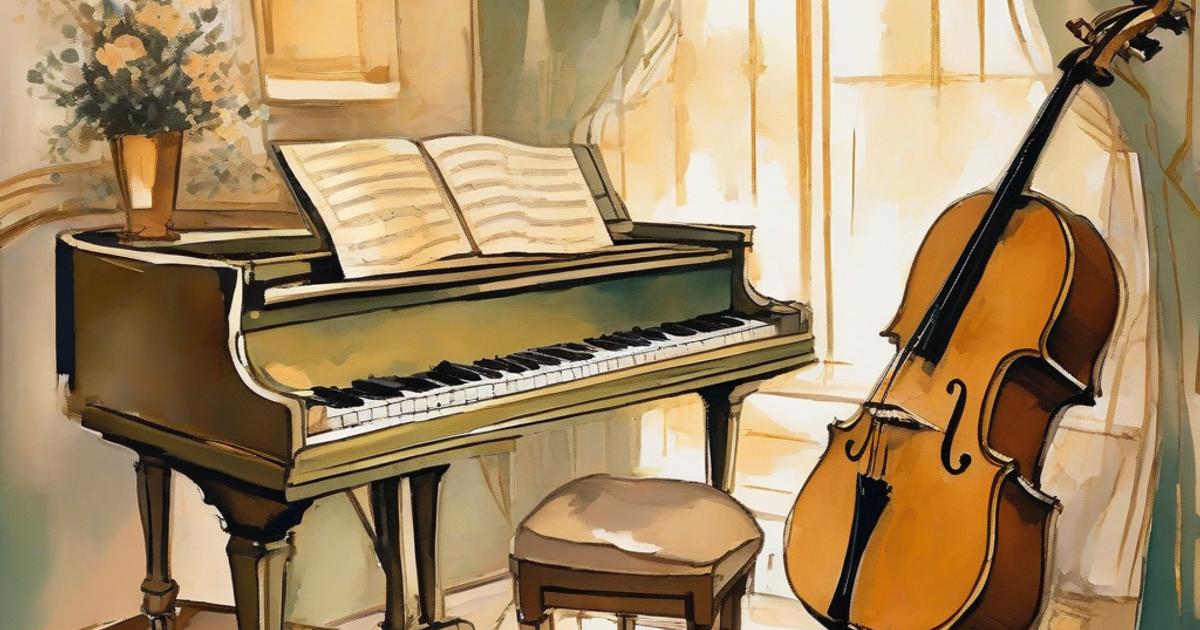
A song you love often carries lyrics written for someone else’s story, which can feel strange to play word for word at your own ceremony. An instrumental version keeps the melody everyone recognises and leaves the words behind, played live on piano and strings. Here’s how that works for each ceremony moment, from the aisle to the reception.
Why Instrumental Versions Suit a Ceremony
An instrumental arrangement lets you use almost any song you love, including ones with lyrics about someone else’s romance, because the melody carries the feeling while the words stay out of the room. It also means the same piece can move with you through the day — the version you walk down the aisle to can be played again, fuller or softer, during cocktail hour or dinner, without a lyric fixing it to one single moment.
Piano, violin, or cello takes over the line a singer would normally hold, and the rest of the arrangement fills in what the recording would otherwise carry — harmony, rhythm, momentum. Custom arrangements of your own songs are included in every booking, so this isn’t a limited menu; it’s a starting point for whatever you bring us.
Pop and Film Songs, Arranged Without Vocals
Pop songs usually need the most work to become instrumental, since the melody was written to sit under a voice — but a clear, singable line translates well to violin, cello, or piano. Film score pieces, on the other hand, were composed as instrumentals from the start, so nothing is removed at all.
| Song | Genre | Why It Works Without Vocals |
|---|---|---|
| Perfect — Ed Sheeran | Pop | A steady, singable line that sits naturally on violin or piano |
| A Thousand Years — Christina Perri | Pop | Builds from a quiet opening to a fuller climax, echoing a ceremony’s pace |
| Can’t Help Falling in Love — Elvis Presley | Pop | A simple, familiar melody that reads clearly without the words |
| Gabriel’s Oboe — Ennio Morricone | Film | Written as an instrumental piece from the start, nothing to leave out |
| Married Life — Michael Giacchino | Film | A film score composed without lyrics in the first place |
These are a few starting points — the full repertoire lists more pop, film, and classical pieces by ceremony moment, and any song not on the list is still worth sending us.
Classical Instrumental Standards
Classical pieces sidestep the lyrics question entirely, since they were written as instrumental music from the start. They’re a dependable choice if you’d rather not think about whether a song translates well without its words.
| Piece | Composer | Typical Moment |
|---|---|---|
| Canon in D | Johann Pachelbel | Processional |
| Air on the G String | Johann Sebastian Bach | Processional |
| Ave Maria | Franz Schubert | Signing |
| Clair de Lune | Claude Debussy | Cocktail hour |
| Wedding March | Felix Mendelssohn | Recessional |
Our guide to processional and recessional songs covers how several of these pieces fit the entrance and exit specifically, if that’s the moment you’re planning around.
Piano, Strings, or Both: How the Sound Changes
On solo piano, one hand carries the melody a vocalist would normally sing while the other fills in harmony and rhythm underneath it — a complete arrangement from one instrument. On solo violin or cello, the melody sits further out front, closer to the exposed, expressive quality of a solo voice, with less happening underneath it.
Piano and strings together — the setup in Allegra’s Duo, Trio, and String Quartet formations — split the job: piano holds the harmony and rhythm, the strings carry the melody. That combination fills out a song that originally had just one voice and a handful of other instruments behind it, which is part of why piano is included as standard in those formations rather than treated as an optional extra. Our packages page breaks down what each formation includes.
Turning Your Own Song Into an Instrumental
Any song you send is considered for an instrumental arrangement, and custom arrangements of your own songs are included in every booking, not charged separately. Our guide to how a custom arrangement is made walks through what to send and what happens next in more detail.
In practice, that means sending us the song and a reference recording, telling us which ceremony moment it’s for, and letting us confirm honestly how it will sound on your chosen formation. Send it early — an arrangement needs a little lead time to get right — and we’ll take it from there.
Frequently Asked
Can any song be played as an instrumental?
Most songs can be arranged as an instrumental for piano or strings, and custom arrangements of your own songs are included in every booking, not charged separately. Send us a reference recording and we'll confirm how it translates for your formation.
Which instrumental songs are popular for walking down the aisle?
Isn't She Lovely, To Build a Home, You Are the Reason, and From This Moment On are among the pop songs couples ask us to arrange for the entrance, alongside classical standards like Canon in D and Air on the G String.
Does an instrumental version need a singer?
No — piano or violin carries the melody a singer would normally hold, so no vocalist is required. If you'd still like a vocal element, a vocalist can be added to your booking; message us on WhatsApp with your date and the songs you have in mind.
Which formation suits instrumental versions best?
Any formation works. A solo pianist or violinist carries the melody alone, while Duo, Trio, and String Quartet add piano as standard, splitting the melody and harmony between more instruments for a fuller sound.
Do pop songs still work without their lyrics?
Often, yes — a strong melody line reads clearly even without the words, though not every song translates equally well. Send us the song and a reference recording and we'll tell you honestly how it will sound arranged for piano and strings.
Have a date in mind?
Message us on WhatsApp with your date and venue — we'll help you choose a formation.
Check Your Date Packages