For Wedding Planners & Venues
Keeping Live Wedding Instruments Safe From Bali's Heat and Rain
Published
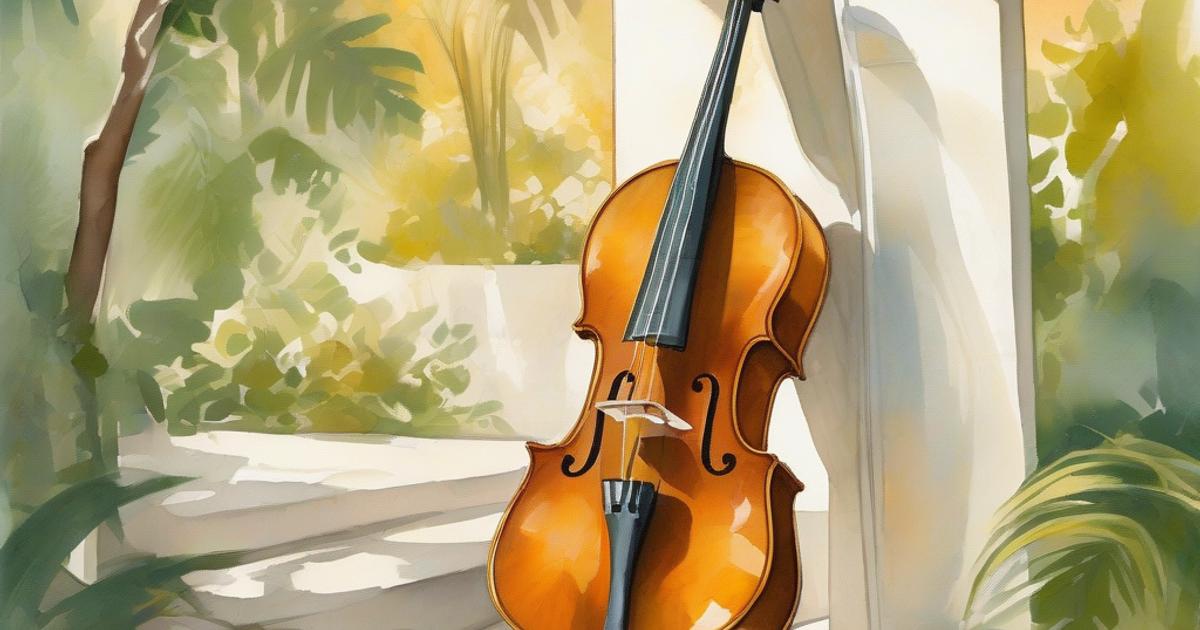
A violin, viola, cello, or double bass is carved wood held together by glue, and an unshaded Bali afternoon or a sudden shower puts both at risk. This guide explains what sun, humidity, and rain do to live wedding instruments, so you can arrange the shade and shelter that keep the music playing from the processional to the last note.
Why Do Wooden Instruments React to Bali’s Weather?
Because wood absorbs and releases moisture from the air, and the glue that holds a string instrument together weakens in heat and humidity. A violin-family instrument has a spruce top and maple back and ribs, and both expand and contract as humidity changes, according to luthiers interviewed by The Strad.
The glue matters as much as the wood. Violins, violas, cellos, and double basses are traditionally assembled with animal glue, chosen because it can be undone for future repairs. The trade-off is that it loses its grip in warm, humid conditions. Too much humidity can weaken glue joints and soften the wood, pegs can swell until they no longer turn, and on cellos in particular the neck angle can drop.
Change is often harder on an instrument than steady heat. One of them singles out the move from an air-conditioned room into hot outdoor air as the moment wooden instruments handle worst, which is a useful detail when you plan where instruments wait before a ceremony.
Piano is affected too. The Piano Technicians Guild explains that a piano’s soundboard is wood: it swells as humidity rises and flattens as it falls, pulling the strings sharp or flat. A piano only stays in tune while the humidity around it stays constant, and the Guild names roughly 20°C (68°F) and 42% relative humidity as the optimal conditions, far from a tropical afternoon outdoors.
What Direct Sun Does to Varnish, Glue, and Strings
Direct sun is the quickest way to damage a string instrument at an outdoor ceremony. Luthiers warn that varnish should never sit in direct sunlight for long, because heat can melt it into bubbles that are very hard to repair, and warm glue is what lets a seam between the top and ribs come apart.
For the strings, the risk is stability rather than a single dramatic failure. As the wood moves, string height and tuning shift, swollen pegs make retuning harder, and an open seam shows up as a buzz or rattle in the middle of a piece. None of this is what you want during a vow exchange.
Shade protects the musicians as much as the instruments. A player sitting in full sun overheats, and one luthier notes that sweat is surprisingly effective at removing varnish. Shade over the playing area keeps both the performance and the instrument steady.
Why Rain Means Moving, Not Playing On
Rain is a firm stop, not a judgment call. Piano and string instruments can’t be played in the rain, and the safety of the musicians and their instruments comes first. Before your date, we agree on a covered, sheltered spot with you or the venue; if rain arrives, the ensemble moves there so the performance can continue safely. A Rain Plan for Live Music at an Outdoor Wedding walks through how to choose that spot and who makes the call on the day.
A light drizzle counts. Water on varnish and bare wood is exactly the moisture these instruments are built to avoid, and a digital piano adds electronics and a power connection to the list. Because a shower can arrive with little warning, the backup spot needs to be confirmed in advance, not chosen as the clouds arrive.
What About the Piano at an Outdoor Ceremony?
For outdoor ceremonies we typically bring a high-quality digital piano, which holds its tuning in humidity and still carries its flagship role in every formation. It is still an electronic instrument, so it needs shade, a level surface, and a dry, covered power connection.
If your venue has its own acoustic piano, it belongs indoors or under solid cover. The Piano Technicians Guild describes direct sunlight as especially damaging and advises keeping pianos away from extremes of temperature and humidity, so moving an acoustic piano out onto a lawn or terrace for one ceremony is not something to improvise on the day.
A Planner’s Checklist for Protecting the Instruments
Most of what keeps instruments safe is set up before the musicians arrive. These are the points worth confirming with the venue when you plan an open-air ceremony:
| What to arrange | Why it matters |
|---|---|
| Shade over the whole playing area, from soundcheck through the final piece | Direct sun softens varnish and glue, and the musicians need it too |
| Shade planned for where the sun will be at ceremony time, not at the site visit | A spot that is shaded at 10am can sit in full sun by golden hour |
| A shaded, covered place for instrument cases before and after the set, never a parked car | Cases slow down heat and humidity changes; a closed car is one of the worst places |
| A short, gradual path from any air-conditioned holding room to the ceremony spot | Sudden swings between cold, dry air and hot, humid air are hard on wood |
| A covered backup spot agreed in advance | Rain means moving the ensemble, not waiting it out |
| A flat, stable, dry surface for chairs, stands, and the piano (sand-free on the beach) | Uneven or wet ground puts both musicians and instruments at risk |
| A dry, covered power connection near the piano | The digital piano is electronic; power and water must stay apart |
The exact space, shade, and power needs depend on your formation and venue, and they are spelled out in the tech rider we send on request. Tech Rider Basics for Live Chamber Music at Weddings explains what that document covers, and For Planners & Venues sets out how we work with your team. For quick answers on outdoor venues, rain, and sound, see our FAQ.
Frequently Asked
Can string instruments be played in direct sun at an outdoor wedding?
Not safely for long. Direct sun can soften a string instrument's varnish and weaken the glue that holds its seams together, so we ask for shade over the whole playing area, from soundcheck through the final piece, at any open-air ceremony.
What does high humidity do to a violin or cello?
Wood absorbs moisture and swells, and the animal glue used in string instruments loses grip in warm, humid air. Luthiers point to open seams, swollen pegs that jam, and shifting string height as the usual results, which is why steady, sheltered conditions matter more than any single temperature reading.
What happens if it rains during the ceremony?
The safety of the musicians and their instruments comes first. Before your date, we agree on a covered, sheltered spot with your planner or venue; if rain arrives, the ensemble moves there so the performance can continue safely. Piano and string instruments can't be played in the rain.
Do you bring an acoustic piano to outdoor weddings?
For outdoor ceremonies we typically bring a high-quality digital piano, which holds its tuning in humidity. It still needs shade, a level surface, and a dry, covered power connection, the same as any electronic instrument outdoors.
What should a planner arrange to protect the musicians' instruments?
Shade over the full playing area, a shaded and covered place for instrument cases, a flat and stable surface, dry power for the piano, and a covered backup spot agreed before the day. Our tech rider lists the specifics for your formation.
Have a date in mind?
Message us on WhatsApp with your date and venue — we'll help you choose a formation.
Check Your Date Packages